

What is the Fracture Toughness of Welded Gabion?
As a trusted supplier of Welded Gabion, I often encounter inquiries about the technical aspects of our products. One question that frequently arises is about the fracture toughness of welded gabions. In this blog post, I will delve into the concept of fracture toughness, its significance in the context of welded gabions, and how it impacts the performance of these structures.
Understanding Fracture Toughness
Fracture toughness is a critical material property that measures a material's resistance to crack propagation. In simple terms, it indicates how well a material can withstand the presence of cracks or flaws without undergoing sudden and catastrophic failure. When a material is subjected to external forces, cracks may initiate and grow. Fracture toughness determines the maximum stress that a material can tolerate before these cracks lead to complete failure.
In the case of welded gabions, which are made from welded wire mesh and filled with stones or other materials, fracture toughness is essential for ensuring the long - term stability and durability of the structure. Welded gabions are commonly used in civil engineering applications such as retaining walls, erosion control, and slope stabilization. These structures are often exposed to various environmental factors and mechanical loads, which can potentially cause cracks in the wire mesh or at the weld joints.
Factors Affecting the Fracture Toughness of Welded Gabions
Several factors influence the fracture toughness of welded gabions. The quality of the wire used in the mesh is a primary determinant. High - quality steel wires with appropriate chemical compositions and heat treatments tend to have better fracture toughness. For example, wires with a higher carbon content may have increased strength but could also be more brittle, reducing their fracture toughness. On the other hand, wires with a well - balanced alloy composition can offer a good combination of strength and toughness.
The welding process also plays a crucial role. Poorly welded joints can create stress concentrations, which are points where the stress is significantly higher than the average stress in the material. These stress concentrations can act as initiation sites for cracks, reducing the overall fracture toughness of the gabion. A proper welding technique, such as using the right welding parameters and ensuring good fusion between the wires, is necessary to maintain the integrity of the structure and enhance its fracture toughness.
The size and shape of the stones or fill material used in the gabion can also impact fracture toughness. Irregularly shaped stones can cause uneven stress distribution within the gabion, potentially leading to localized stress concentrations. Additionally, if the stones are too large or too heavy, they can exert excessive pressure on the wire mesh, increasing the risk of crack formation.
Measuring Fracture Toughness
There are several methods for measuring the fracture toughness of materials. One commonly used approach is the use of fracture mechanics tests, such as the Charpy V - notch test or the compact tension test. In the Charpy V - notch test, a specimen with a V - shaped notch is subjected to an impact load. The energy absorbed during the fracture process is measured, and this value is used as an indicator of the material's fracture toughness.

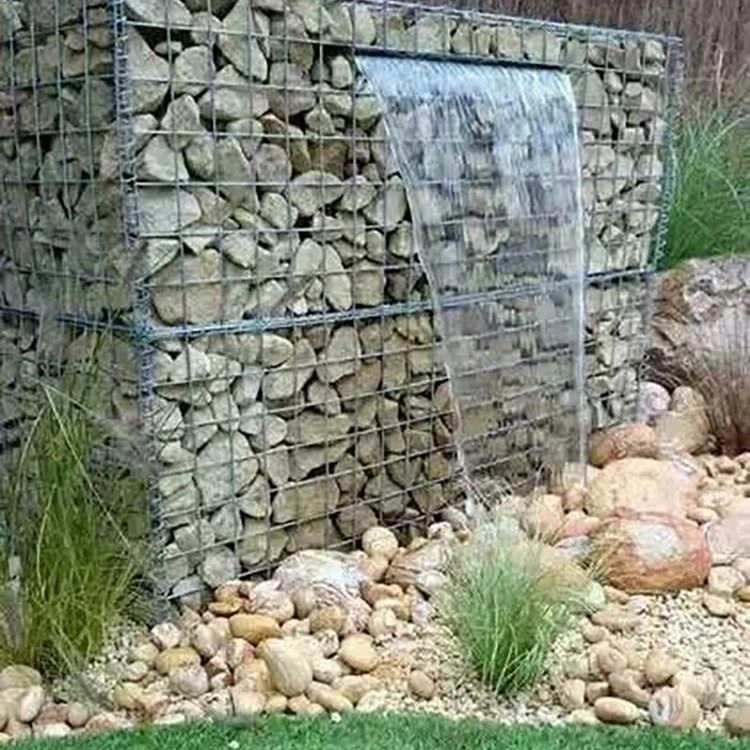
For welded gabions, it is more challenging to directly measure fracture toughness due to their complex structure. However, indirect methods can be used to assess the performance of the gabion in terms of crack resistance. For example, field tests can be conducted to observe the behavior of the gabion under real - world conditions, such as exposure to different loads and environmental factors. Laboratory tests on small - scale specimens cut from the wire mesh or weld joints can also provide valuable information about the material's fracture properties.
Importance of Fracture Toughness in Welded Gabion Applications
In civil engineering applications, the fracture toughness of welded gabions is of utmost importance. A gabion with high fracture toughness can better withstand the stresses and strains associated with its intended use. For example, in a retaining wall application, the gabion needs to resist the lateral pressure exerted by the soil behind it. If the gabion has low fracture toughness, cracks may develop in the wire mesh or weld joints, leading to a loss of structural integrity and potentially causing the wall to fail.
In erosion control applications, welded gabions are exposed to the erosive forces of water. High fracture toughness ensures that the gabion can withstand the impact of flowing water and the movement of sediment without cracking or breaking. This helps to maintain the effectiveness of the erosion control structure over time.
Our Commitment as a Welded Gabion Supplier
As a Welded Gabion supplier, we are committed to providing products with high fracture toughness. We source high - quality steel wires from reputable manufacturers and use advanced welding techniques to ensure the integrity of our gabions. Our quality control team conducts rigorous inspections at every stage of the manufacturing process, from wire selection to final assembly, to ensure that our products meet the highest standards of quality and performance.
We offer a variety of welded gabion products, including Granit Gabion and Galvanized Gabion. The granit gabion is filled with high - quality granite stones, which provide excellent stability and durability. The galvanized gabion is coated with a layer of zinc, which enhances its corrosion resistance and further improves its long - term performance.
Conclusion
In conclusion, the fracture toughness of welded gabions is a critical property that determines their ability to resist crack propagation and maintain structural integrity. Understanding the factors that affect fracture toughness, such as wire quality, welding process, and fill material, is essential for ensuring the long - term performance of these structures. As a welded gabion supplier, we are dedicated to providing products with high fracture toughness to meet the diverse needs of our customers in civil engineering applications.
If you are interested in learning more about our Welded Gabion products or have any questions regarding fracture toughness or other technical aspects, please feel free to contact us. We are always ready to assist you in finding the best solution for your project.
References
- Anderson, T. L. (2005). Fracture Mechanics: Fundamentals and Applications. CRC Press.
- ASTM International. (2018). Standard Test Methods for Charpy Impact Testing of Metallic Materials. ASTM E23 - 18.
- Dieter, G. E. (1986). Mechanical Metallurgy. McGraw - Hill.