

Hey there! I'm a supplier of Gabion Mesh, and today I'm gonna chat with you about how to adjust the permeability of Gabion Mesh.
First off, let's talk about why permeability matters. In a lot of construction and environmental projects, the right permeability of Gabion Mesh can make or break the outcome. For example, in erosion control along riverbanks, the right amount of water flow through the Gabion can help prevent soil erosion while keeping the structure stable. If the permeability is too low, water may build up, increasing the pressure on the Gabion and potentially causing it to fail. On the other hand, if it's too high, the Gabion may not effectively hold back the soil.
Understanding Gabion Mesh
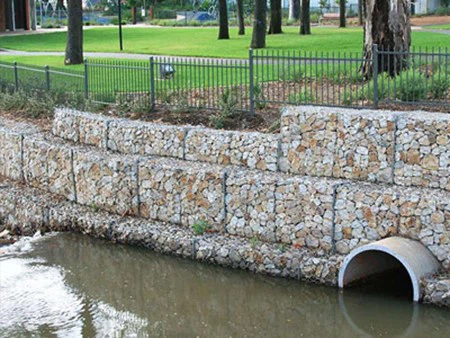
Gabion Mesh is a versatile material that comes in different types, like Granit Gabion and Galvanized Gabion. The basic structure of Gabion Mesh consists of a wire mesh filled with stones. The size of the mesh openings and the type and size of the stones inside play a crucial role in determining its permeability.
Factors Affecting Permeability
Mesh Opening Size
The size of the openings in the Gabion Mesh is probably the most obvious factor. A larger mesh opening will generally allow more water to pass through, increasing the permeability. For instance, if you're using a Gabion for a drainage project where quick water flow is needed, you might choose a Gabion Mesh with relatively large openings. But remember, if the openings are too large, the stones inside may start to fall out, which could compromise the integrity of the structure.
Stone Type and Size
The type and size of the stones used to fill the Gabion also have a big impact on permeability. Larger stones create larger voids between them, allowing more water to flow through. For example, using large granite stones can increase the permeability compared to using smaller gravel. Different stone types also have different porosities. Some porous stones can absorb and release water, which can affect the overall permeability of the Gabion.
Compaction
How tightly the stones are packed inside the Gabion can change its permeability. If the stones are loosely packed, there will be more space for water to flow through, increasing permeability. However, over - time, loose packing may cause the stones to shift, potentially changing the permeability. On the other hand, if the stones are compacted too tightly, the permeability will decrease as there is less space for water movement.
Adjusting Permeability
Selecting the Right Mesh
When you're looking to adjust the permeability of your Gabion, start by choosing the right Gabion Mesh. If you need higher permeability, go for a mesh with larger openings. But make sure the mesh is strong enough to hold the stones in place. You can consult with your supplier to get the best advice based on your specific project requirements.
Choosing the Appropriate Stones
Consider the type and size of the stones. For a higher permeability, opt for larger stones with lower porosity. If you need to slow down the water flow and reduce permeability, smaller stones or those with higher porosity can be a good choice. Also, you can mix different sizes and types of stones to achieve a more customized permeability.
Controlling Compaction
During the filling process, you can control the compaction of the stones. If you want to increase permeability, let the stones fall freely into the Gabion, creating more voids. If you need to decrease it, you can use a tamper or other tools to compact the stones more tightly. However, be careful not to over - compact, as it may damage the stones or the mesh.
Case Study
Let's take a look at a real - world example. A coastal area was experiencing serious erosion, and they decided to use Gabions along the shoreline. The initial design used a Gabion Mesh with small openings and tightly packed gravel. The permeability was very low, and water started to build up behind the Gabions. This led to increased pressure on the Gabions, and some of them started to fail.
The project team then made some adjustments. They changed to a Galvanized Gabion with larger mesh openings and used larger granite stones. They also filled the Gabions more loosely. As a result, the permeability increased, water was able to flow through the Gabions more easily, and the erosion problem was effectively mitigated.

Conclusion
Adjusting the permeability of Gabion Mesh is a critical part of many projects. By understanding the factors that affect permeability, such as mesh opening size, stone type and size, and compaction, you can make informed decisions to achieve the desired permeability. Whether you're working on an erosion control project, a drainage system, or any other application where Gabion Mesh is used, getting the permeability right is key to the success of your project.
If you're in need of Gabion Mesh for your next project and want to discuss the best options for adjusting permeability, don't hesitate to reach out. We're here to help you make the right choices and ensure the success of your project.
References
- "Gabion Structures: Design, Construction, and Maintenance" by some experts in the field.
- Various research papers on geotechnical engineering related to the use of Gabion Mesh in different applications.