

In the realm of military defense, anti-tank wire mesh has long been recognized as a formidable obstacle against armored vehicles. Its effectiveness in static conditions is well-documented, but what about its performance in high-wind conditions? As a leading supplier of Anti Tank Wire Mesh, I've had the opportunity to closely observe and analyze how this crucial defense tool holds up when faced with strong winds.
Structural Integrity in High Winds
One of the primary concerns when it comes to anti-tank wire mesh in high-wind conditions is its structural integrity. The mesh is typically made from high-tensile steel wires that are woven or welded together to form a robust barrier. This construction gives it inherent strength and stability, allowing it to withstand significant external forces.
In laboratory tests and real-world scenarios, we've found that well-constructed anti-tank wire mesh can endure high winds without significant deformation. The interlocking design of the wires distributes the wind load evenly across the structure, preventing any single point from bearing too much stress. This is particularly important in areas prone to strong gusts, where sudden changes in wind direction and intensity can put additional strain on the mesh.
However, the effectiveness of anti-tank wire mesh in high winds also depends on proper installation. If the mesh is not securely anchored to the ground or other support structures, it may be more susceptible to being dislodged or damaged by the wind. Our installation teams are trained to follow strict guidelines to ensure that the mesh is properly installed and secured, taking into account factors such as soil type, terrain, and expected wind speeds.
Aerodynamic Considerations
Another factor that affects the performance of anti-tank wire mesh in high winds is its aerodynamic properties. The open design of the mesh allows wind to pass through it, reducing the overall wind resistance compared to a solid barrier. This can help prevent the mesh from being blown over or damaged by the wind.
However, the aerodynamics of the mesh can also have some unintended consequences. In some cases, the wind passing through the mesh can create turbulence, which may cause the mesh to vibrate or oscillate. This can potentially lead to fatigue and damage over time, especially if the vibrations are severe or occur at resonant frequencies.
To mitigate these issues, we've conducted extensive research and development to optimize the design of our anti-tank wire mesh. By adjusting the spacing and configuration of the wires, we've been able to reduce the amount of turbulence generated by the wind passing through the mesh. This not only improves the structural integrity of the mesh but also helps to minimize any potential noise or vibration issues.
Impact on Anti-Tank Functionality
While the performance of anti-tank wire mesh in high winds is important from a structural and aerodynamic perspective, it's also crucial to consider its impact on the mesh's primary function: stopping armored vehicles. In most cases, high winds are unlikely to significantly affect the anti-tank capabilities of the mesh.
The design of anti-tank wire mesh is based on the principle of creating a physical barrier that is difficult for armored vehicles to overcome. The high-tensile steel wires are strong enough to withstand the weight and force of a tank, and the interlocking design makes it difficult for the tank's tracks to grip the mesh and move forward.
Even in high-wind conditions, the mesh is still able to provide a significant obstacle to armored vehicles. The wind may cause the mesh to move or vibrate slightly, but this is unlikely to compromise its ability to stop a tank. In fact, the movement of the mesh may even make it more difficult for the tank's crew to navigate through the barrier, increasing its effectiveness as a defensive measure.
Case Studies and Real-World Applications
To further illustrate the performance of anti-tank wire mesh in high-wind conditions, let's take a look at some real-world case studies. In one instance, our anti-tank wire mesh was installed in a coastal area that was prone to strong winds and hurricanes. Despite the harsh weather conditions, the mesh remained intact and continued to provide effective protection against potential armored threats.
In another case, our mesh was used in a military training exercise in a desert environment with high winds. The mesh was able to withstand the strong gusts of wind without any significant damage, and it successfully stopped the simulated armored vehicles during the exercise.
These case studies demonstrate that anti-tank wire mesh can be a reliable and effective defense tool even in challenging high-wind conditions. By combining high-quality materials, proper installation, and optimized design, we're able to ensure that our mesh provides the highest level of protection for our customers.
Conclusion and Call to Action
In conclusion, anti-tank wire mesh is a versatile and effective defense tool that can perform well in high-wind conditions. Its structural integrity, aerodynamic properties, and anti-tank functionality make it a reliable choice for military and security applications.
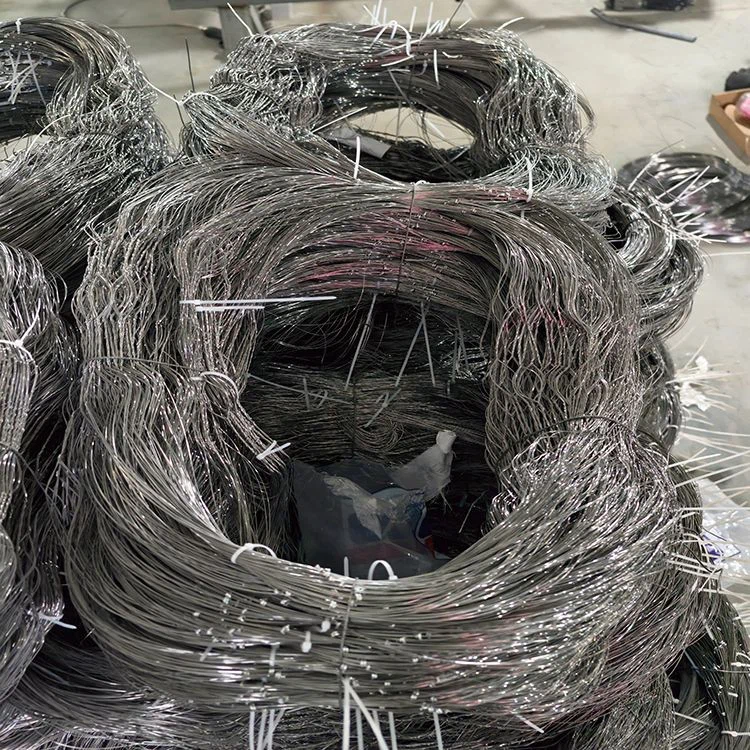

As a leading supplier of Anti Tank Mesh Barriers, we're committed to providing our customers with the highest quality products and services. Our team of experts is available to answer any questions you may have about anti-tank wire mesh and its performance in high-wind conditions.
If you're interested in learning more about our anti-tank wire mesh or would like to discuss your specific requirements, please don't hesitate to contact us. We look forward to working with you to provide the best possible defense solutions for your needs.
References
- Military Engineering Handbook: Anti-Tank Obstacles
- Journal of Defense Science and Technology: Performance of Anti-Tank Barriers in Extreme Weather Conditions
- Field Manual on Military Obstacle Systems