

In the realm of military defense and security, the choice of barriers to counter potential tank threats is a critical decision. Two commonly considered options are anti tank wire mesh and chain link fences. As a supplier of Anti Tank Wire Mesh, I have in - depth knowledge of these products and their effectiveness in anti - tank applications. This blog will compare anti tank wire mesh with chain link fences, exploring their respective features, advantages, and limitations in anti - tank use.
Structural and Material Differences
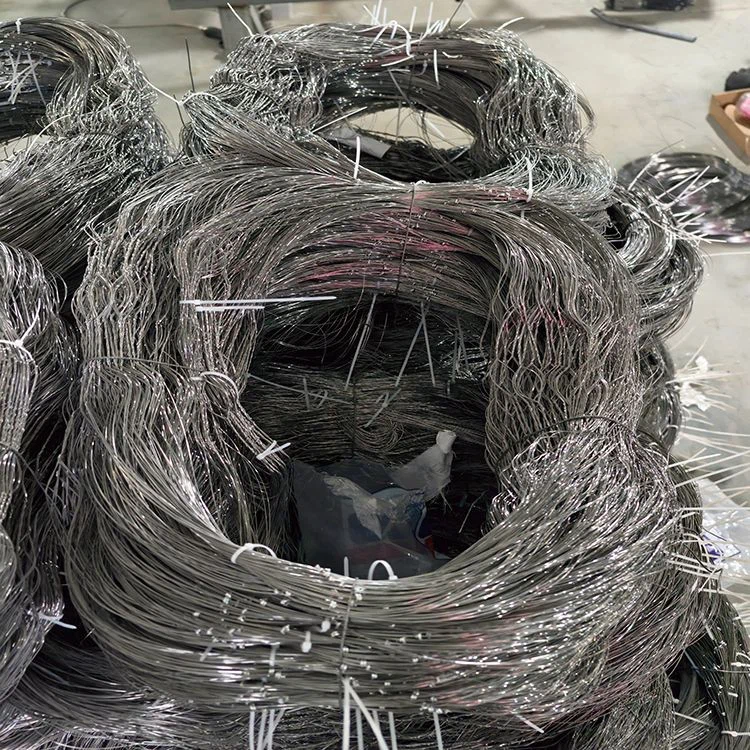
Anti tank wire mesh is specifically engineered to withstand the force exerted by tanks. It is typically made from high - strength steel wires that are carefully woven or welded together. The design of anti tank wire mesh often includes a complex pattern that maximizes its ability to entangle tank tracks and disrupt the tank's movement. For example, some anti tank wire meshes have sharp protrusions or irregular shapes that can catch on the tank's treads, preventing the tank from advancing smoothly.
On the other hand, chain link fences are made of galvanized steel wires formed into a diamond - shaped pattern. The wires used in chain link fences are generally thinner and more flexible compared to those in anti tank wire mesh. The main purpose of chain link fences is to provide a physical barrier for perimeter security in civilian and some military non - tank - facing applications, such as marking boundaries or keeping unauthorized personnel out.
Effectiveness Against Tanks
When it comes to anti - tank effectiveness, anti tank wire mesh has a clear edge. Tanks rely on their tracks for mobility, and anti tank wire mesh is designed to target this vulnerability. The dense and irregular structure of anti tank wire mesh can quickly get caught in the tank's tracks, causing the tracks to jam or break. Once the tracks are compromised, the tank becomes immobile, rendering it ineffective in combat.
Chain link fences, however, are not built to withstand the weight and force of a tank. A tank can easily drive through a chain link fence without significant resistance. The thin wires of the chain link fence are not strong enough to entangle the tank's tracks, and the overall structure of the fence is too flimsy to impede the tank's progress. In a real - world anti - tank scenario, a chain link fence would offer little to no protection.
Durability and Long - term Use
Anti tank wire mesh is built to last in harsh military environments. The high - strength steel used in its construction is resistant to corrosion, rust, and damage from weather conditions. This means that anti tank wire mesh can remain effective for a long time, even when exposed to the elements. It can also withstand repeated impacts from small arms fire and other minor attacks without losing its anti - tank capabilities.
Chain link fences, while relatively durable in normal civilian settings, are not as well - suited for long - term anti - tank use. The thin wires are more prone to damage from weather, corrosion, and mechanical stress. Over time, the chain link fence may become weak and lose its integrity, making it even less effective as a barrier. In addition, chain link fences may require more frequent maintenance to keep them in good condition.
Ease of Installation and Deployment
Anti tank wire mesh can be relatively easy to install, especially when compared to some other heavy - duty anti - tank barriers. It can be pre - fabricated in large panels and transported to the installation site. Once on - site, the panels can be quickly assembled and secured to the ground using stakes or other anchoring methods. This makes anti tank wire mesh a practical option for rapid deployment in emergency situations.
Chain link fences are also easy to install in general. They come in rolls that can be unrolled and attached to posts. However, in an anti - tank context, the ease of installation does not translate into effectiveness. Even if a chain link fence is quickly installed, it will not provide the necessary protection against tanks.
Cost - effectiveness
The cost of anti tank wire mesh and chain link fences can vary depending on factors such as size, quality, and quantity. Generally, anti tank wire mesh is more expensive than chain link fences due to the high - quality materials and specialized manufacturing processes involved. However, when considering the long - term effectiveness and the value of protecting against tank threats, anti tank wire mesh offers better cost - effectiveness.
A chain link fence may be a cheaper initial investment, but its lack of anti - tank capabilities means that it will not serve its intended purpose in a tank - facing situation. In the long run, the cost of replacing ineffective chain link fences or dealing with the consequences of a tank breakthrough can far exceed the cost of investing in anti tank wire mesh.
Applications and Compatibility
Anti tank wire mesh is primarily used in military applications where tank threats are a concern. It can be deployed along borders, around military bases, or in strategic locations on the battlefield. Anti tank wire mesh can also be combined with other anti - tank barriers, such as Anti Tank Mesh Barriers, to create a more comprehensive defense system.

Chain link fences are more commonly used in civilian and non - tank - facing military applications. They are used for things like securing industrial sites, schools, and sports fields. While chain link fences can be used in military camps for non - combat - related perimeter security, they are not suitable for anti - tank defense.
Conclusion
In conclusion, when it comes to anti - tank use, anti tank wire mesh is clearly the superior choice compared to chain link fences. Its specialized design, high - strength construction, and proven effectiveness against tanks make it an essential component of any anti - tank defense strategy. While chain link fences have their uses in other areas of security, they are not a viable option for protecting against tank threats.
If you are in need of reliable anti - tank solutions, I encourage you to consider our Anti Tank Wire Mesh. Our products are designed and manufactured to the highest standards, ensuring maximum effectiveness and durability. We are committed to providing high - quality anti - tank wire mesh that meets the needs of military and security organizations. Contact us today to discuss your specific requirements and start a procurement negotiation.
References
- Military Engineering Handbook, various editions
- Studies on Anti - tank Barrier Technologies, Defense Research Institutes
- Product Specifications of Anti - tank Wire Mesh and Chain Link Fences, Industry Standards Publications